
A single 4,500-year-old skeleton from Rakhigarhi sparked one of India’s biggest DNA debates. Yet most of the argument rests on one simple mix-up about genetics. Let’s cear it up — using the evidence.
In 2019, one ancient skeleton from the Indus Valley made headlines across India. Some people celebrated the result. Others disputed it. But much of the noise came from a single misunderstanding about what DNA can tell us. So this piece walks through what scientists found, how the science works, and where the confusion begins.
1. One city, sixty-one skeletons, one readable genome.
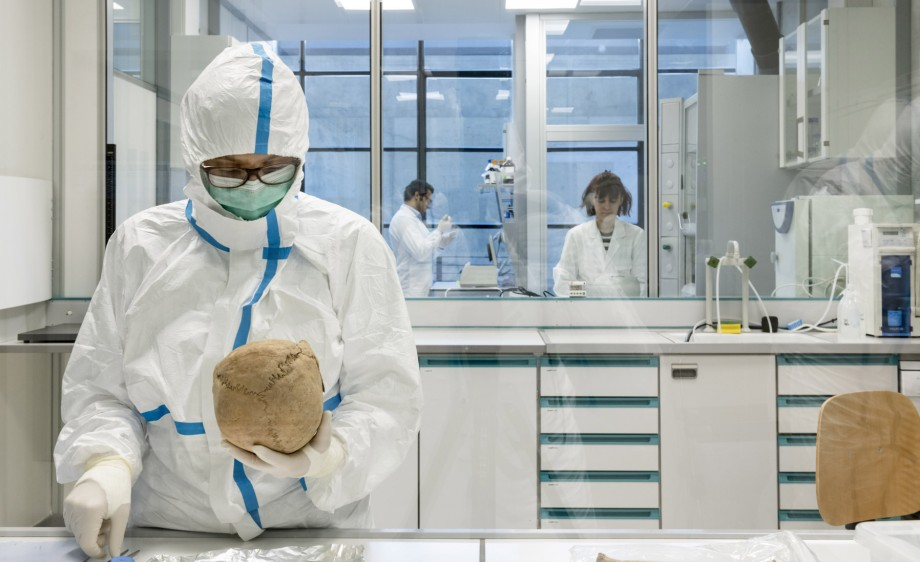
Rakhigarhi sits in present-day Haryana. It is one of the largest known sites of the Indus Valley Civilization. Researchers collected 61 skeletal samples from its cemetery. However, ancient DNA is fragile. In a hot climate, it breaks down fast. As a result, only one sample — labelled I6113 — held enough authentic DNA to study.
The tests showed that this individual was female. That matched the earlier reading of the skeleton itself. And from that one well-preserved genome, the whole debate begins.
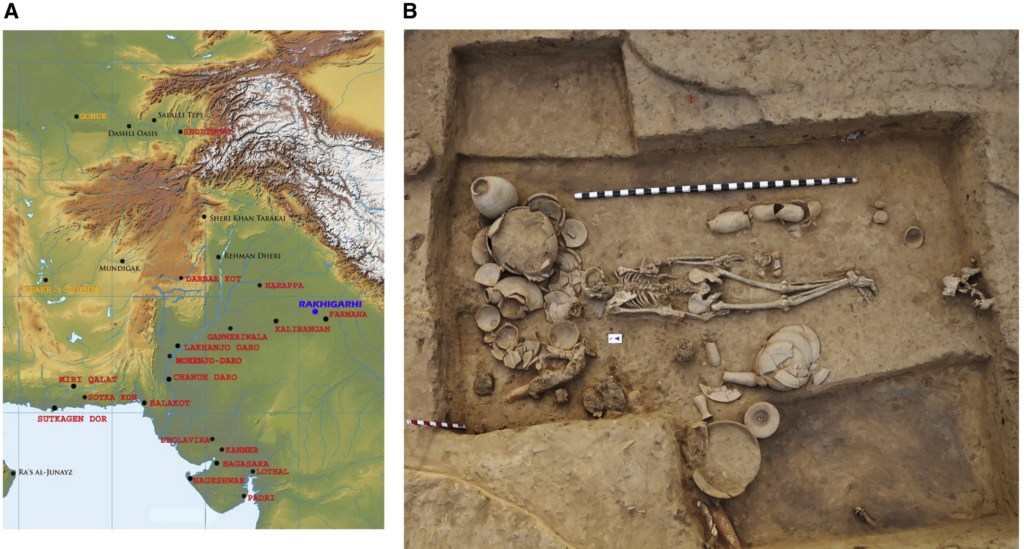
Archeological Context of the Individual Who Yielded Ancient DNA
2. The confusion: one marker is not the whole genome
This is the heart of it. The individual was female. Therefore she carried no Y-chromosome. Male-line markers like R1a cannot appear in her remains. This is not because the data is weak. Instead, it is because biology makes it impossible.
Here is what many people miss. R1a is just one marker on the Y-chromosome. Fathers pass it only to sons. So it traces a single male line. The bigger question is different. Where does a person’s overall ancestry come from? The whole genome answers that. Every person inherits it from both parents, whatever their sex.
A female skeleton tells us plenty about whole-genome ancestry. It simply cannot speak to a male-only marker.
So when someone says “there is no R1a, therefore you cannot find her ancestry,” they have swapped one paternal marker for overall ancestry. In short, those are two different questions.
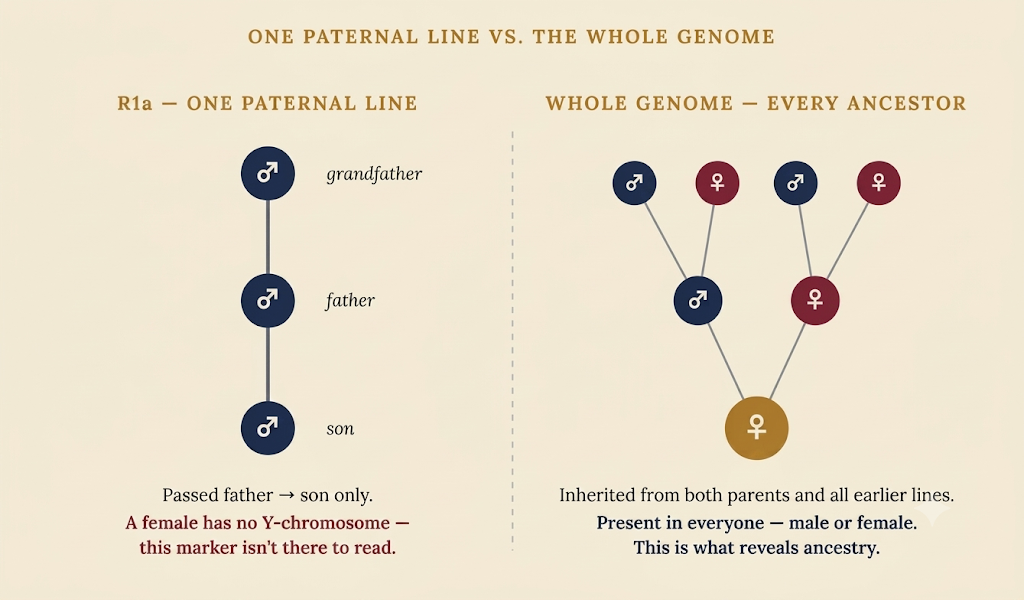
3. What her genome actually showed.
Next, the researchers modelled her whole-genome data. The best-fitting model mixed two older ancestries. First, a large Iranian-related component. Second, an Ancient Ancestral South Indian component, also called Andamanese-related. Crucially, her genome held no Steppe pastoralist ancestry.
Her maternal line agreed. Her mitochondrial lineage, type U2b2, barely appears among ancient Central Asians. Today, it turns up almost only in South Asia.
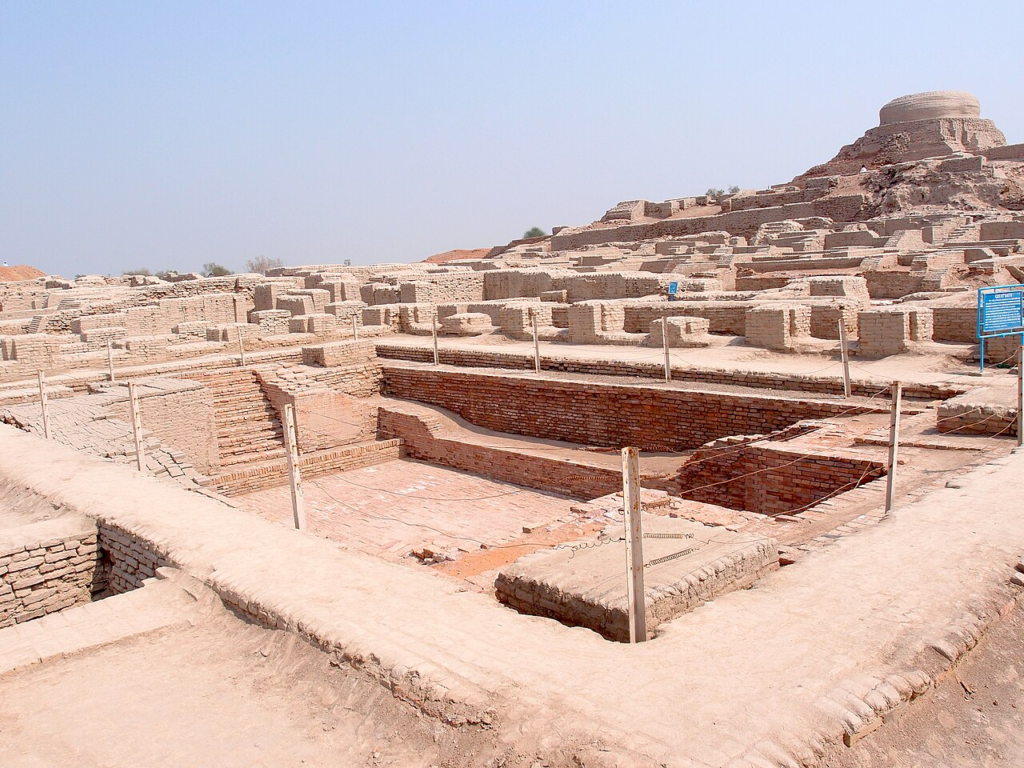
Ruins of Mohenjo-daro on the Indus River in Pakistan, the first South Asian UNESCO World Heritage Site; the Great Bath is in the foreground.
4. Why “found in no living population” mattered
The authors noticed something striking: this exact profile — high Iranian-related ancestry with no Steppe — matches no living group today, in South Asia ( India ) or Iran. Far from a problem, they read it as a sign of authenticity. It is exactly the pattern you expect from truly ancient DNA, not from modern contamination.
5. Where the Steppe fits in the timeline
Still, none of this means Steppe ancestry never reached South Asia. Most research dates its arrival to roughly 2000–1500 BCE. That is after the mature phase of the Indus Valley Civilization.
Scholars link these later migrants to the Indo-Aryan languages — the branch that gave us Sanskrit. People often call this group the Arya. But remember: in the old texts, árya was a cultural and language term, not a race. These migrants brought a language and a pastoralist culture. Importantly, they mixed into the existing population.
The Rakhigarhi woman lived before this layer arrived. So her genome is a snapshot of the Indus people from an earlier time. It is not proof that the later mixing never happened. Both things are true at once, and the timeline keeps them straight.
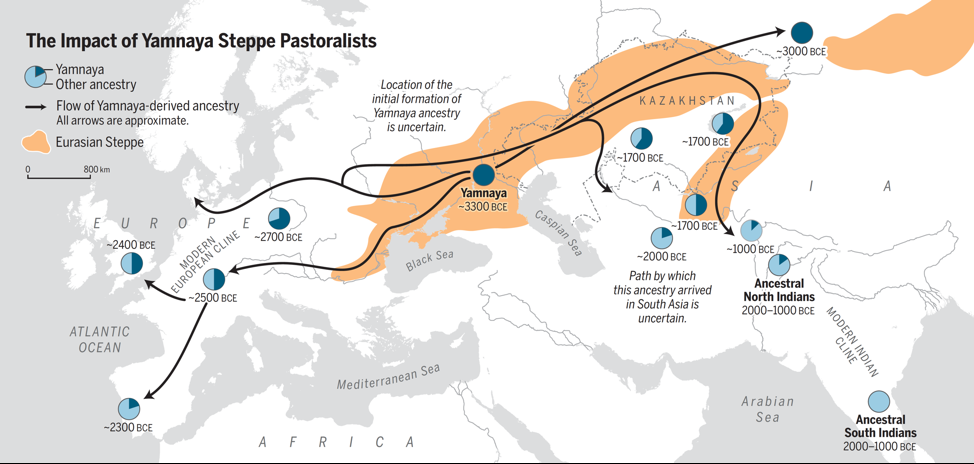
Map showing the reconstructed migrations and genetic contributions of people with steppe pastoralist ancestry. Image: Oliver Uberti/Science
6. What is R1a, actually?
In one line R1a is a haplogroup — one branch of the Y-chromosome family tree. Fathers pass it only to sons. So it traces a single thread of ancestry back across tens of thousands of years.
Because it changes slowly and moves only down the male line, geneticists use it like a surname for deep ancestry. Today, R1a appears at high rates across a wide belt. You find it in Eastern Europe, Central Asia, and South Asia. In fact, many men in northern India and Pakistan carry it.
This is why it became a flashpoint. In the research, R1a links closely to Steppe pastoralist ancestry and to Bronze-Age migrations around 2000–1500 BCE. These are the same migrations tied to the Indo-Aryan languages. People often call this group the Arya. Yet árya was a cultural and language term, not a race. So what these migrants really share is a language and a culture — not a bloodline.
Why her lacking R1a is no mystery
And that is the crux. R1a belongs to the later Steppe layer. Those Indo-Aryan-speaking migrants arrived after the mature Indus civilization. They brought their languages and their horse-and-chariot culture. Then they mixed into the people already living there. The Rakhigarhi woman lived before they came. So her missing R1a is no puzzle and no cover-up. In fact, it is exactly what you expect from the Indus period. Therefore, finding no R1a in her confirms the timeline. It does not contradict it.
The bottom line
A single male-line marker is not a verdict on a whole people. R1a tells one story — paternal, Bronze-Age, and Steppe-linked. That story is real. But the whole genome holds far more. It carries DNA from every ancestor on both sides. And that is what scientists actually read in the Rakhigarhi genome.
The science isn’t hiding anything. It just asks us to read the whole book — not one letter on a page.
Shinde V. et al., “An Ancient Harappan Genome Lacks Ancestry from Steppe Pastoralists or Iranian Farmers,” Cell, 2019 — read the study.
Harvard Medical School, plain-language summary — overview of the findings.
Leave a Reply